
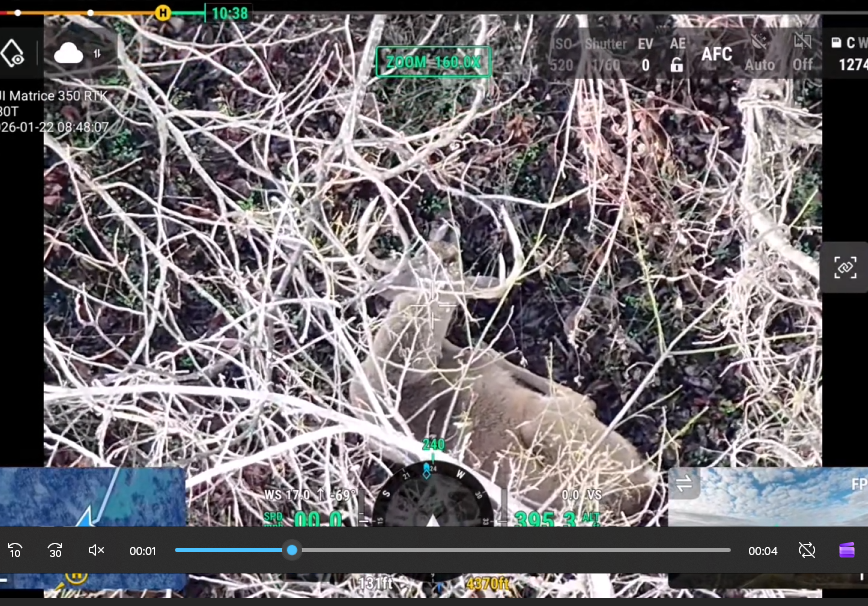
On tracts over 1,000 acres we put 3–8 drones in the air at the same time. No one else in the country is running deer surveys with more than one or two.
One or two drones cannot efficiently cover enough ground per hour to ensure you are not missing or double counting deer.
When to fly: November through March
Typically, we wait until the leaves begin to fall and the bucks have hard horns — that is when you get a clean count and real buck data. Most clients prefer to fly early in the season so they know how many does to take and which bucks to let walk. Others fly during the rut to see the bucks that are not normally bedding or feeding on their property.
Time of day: Overcast and Cloudy during Daylight
We fly in overcast daylight, November through March. Thermal reads best on a cloudy day, and daylight lets us swap to the RGB camera to tell a buck from a doe — all from 400 feet, without putting pressure on the deer.
How it works
Six steps from your boundary file to a report in your inbox.
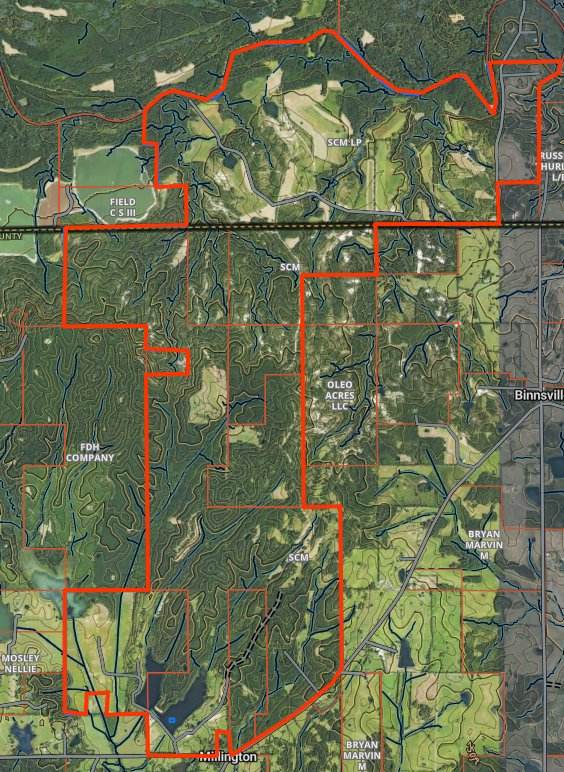
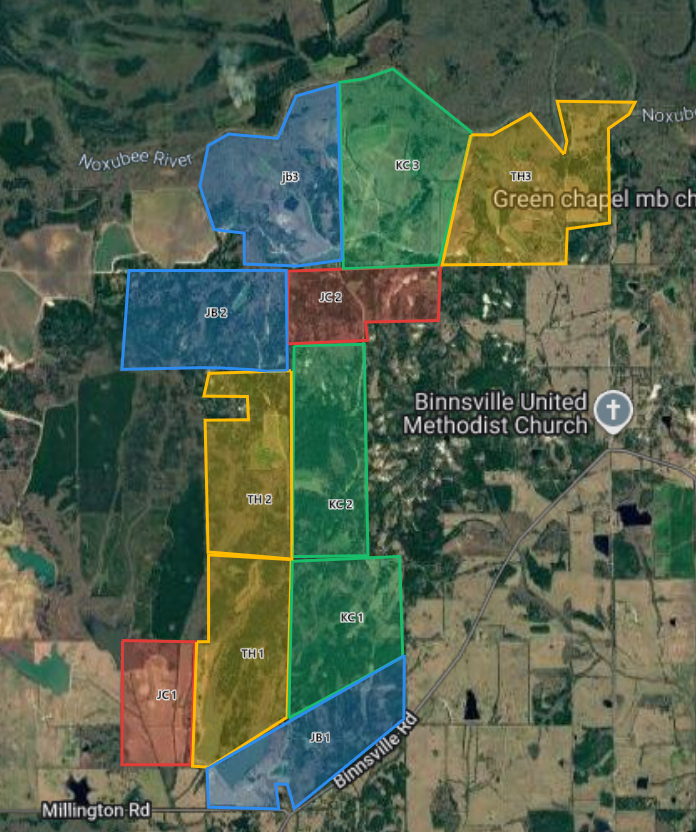
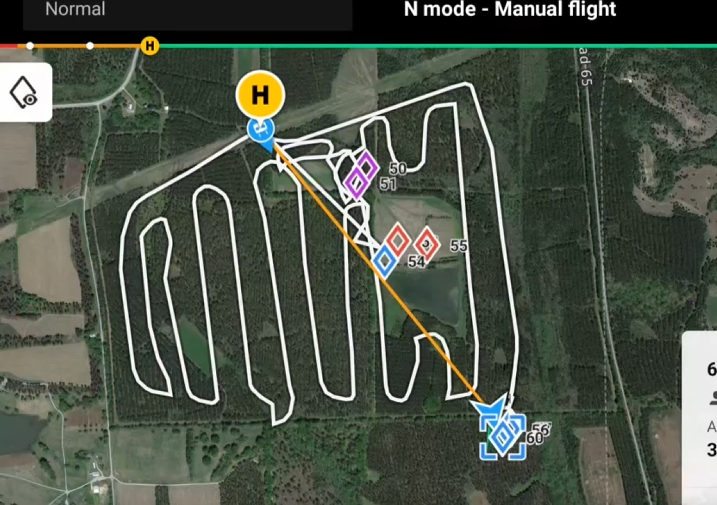
A report you can actually make decisions from.
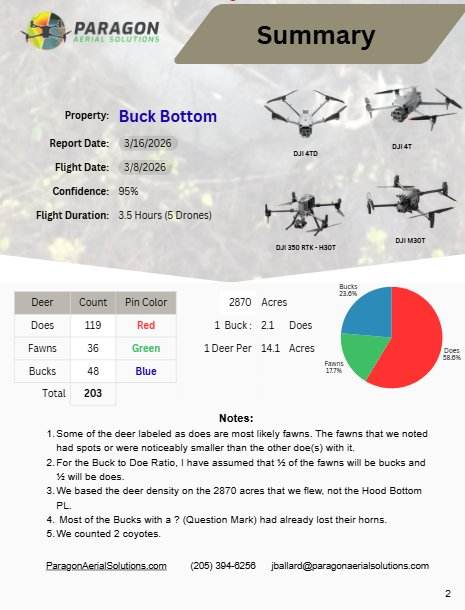
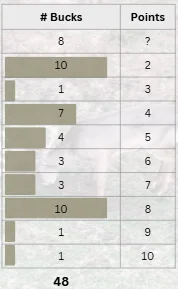
Here is the front page of a real one. Everything below came off a 3,045-acre tract in West Alabama flown with four drones in five hours.
Pricing
Priced by the acre, on a sliding scale.
Larger tracts typically cost less per acre. Call or text with your acreage and property boundary and we will send you a quote.
See a Live Example
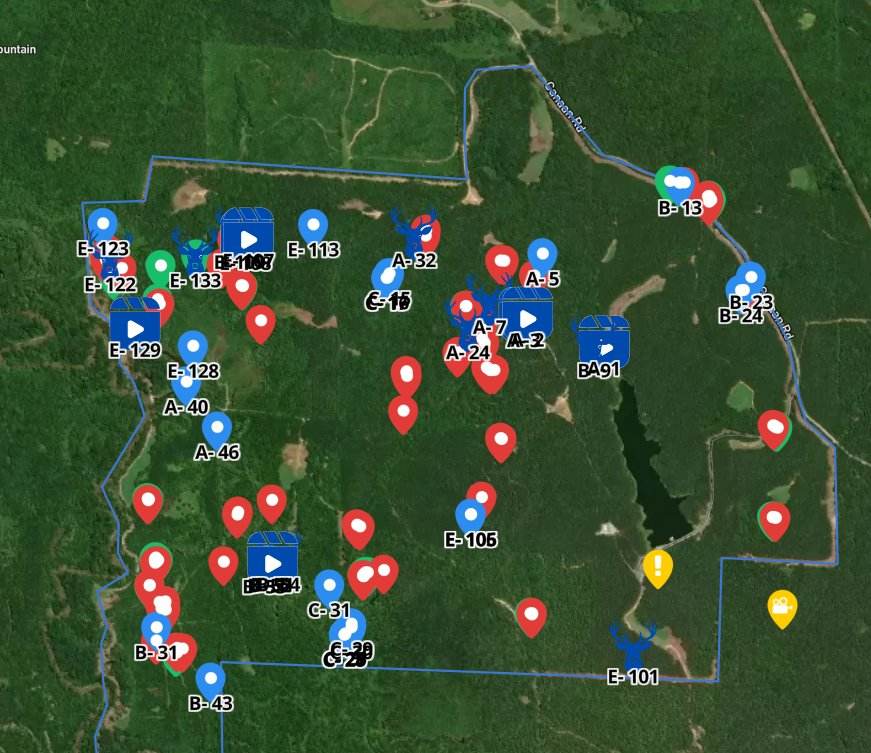
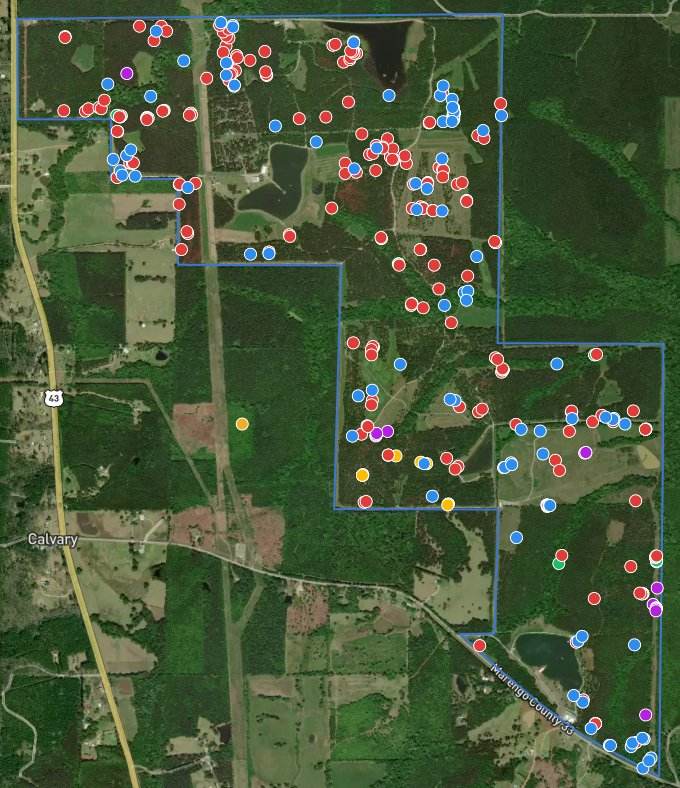
Every pin on your property. Red Does, Green Fawns, Blue Bucks — buck pins carry the photo or video, viewable right from your phone.
Buck Footage
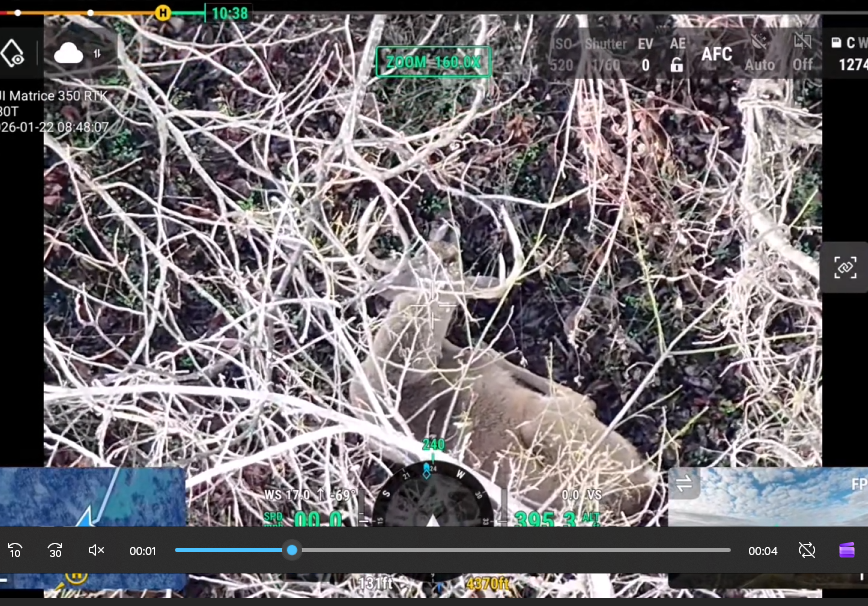
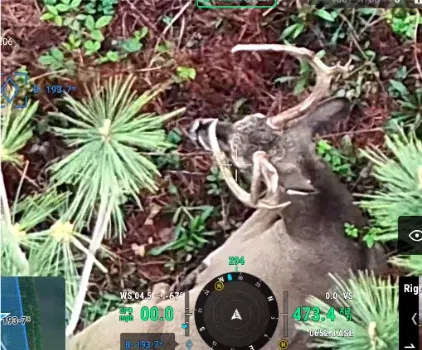
Cut from the RGB camera the same day we flew. This is what a blue pin on your map turns into.
Drone Deer Survey vs Trail Cam-COST
Hardware + Feed + Subs for 5 cams$3,350.00
$1,500.00
*Calculation assumes 1 camera per 100 acres over a 4-month season (approx. 17 weeks).
Shot one and can't find it? Call us before the coyotes do.
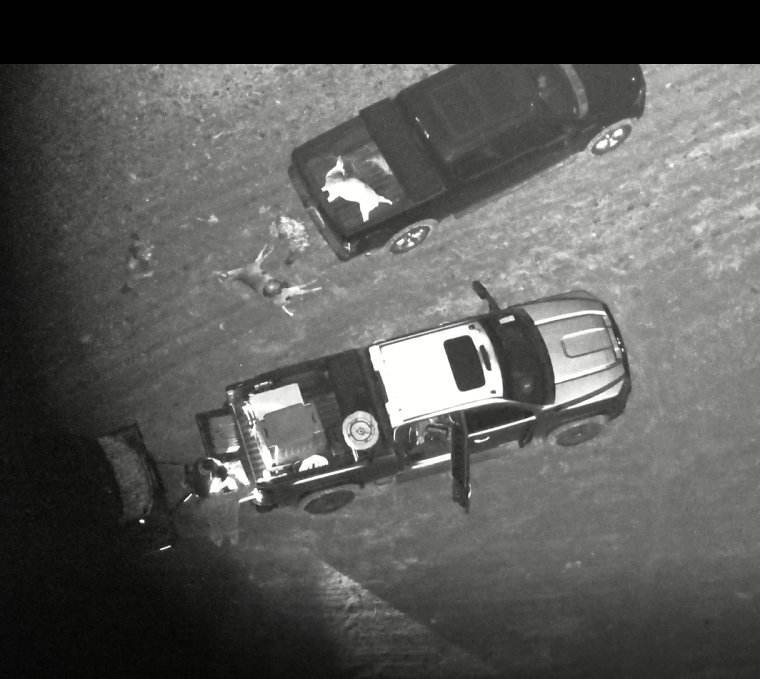
Thermal from the air finds a downed deer in minutes that a grid search would take all night to cover — and it does it without pushing a wounded animal further.
Roughly 75 miles of Tuscaloosa, Alabama. Outside that radius, still call — we know most of the good thermal recovery operators across the state and we will point you to someone who can help you.
See a Full Report
Download a complete herd analysis from a real survey — every page, exactly as the client received it, with the property name removed.
Drone deer survey questions
How accurate is a drone deer survey compared to trail cameras?
A thermal drone survey counts the deer physically on the property during the flight, so there is no double-counting of the same buck across multiple camera sites and no deer missed because they never walked past a camera. Because we fly in overcast daylight we can switch to the RGB camera to confirm buck from doe and read antlers. A trail camera survey estimates a population from repeat captures at bait sites. A drone survey is a direct census of what is there that day.
When is the best time of year to fly a drone deer survey?
November through March. We wait until the leaves are down and the bucks have hard horns — that is when you get a clean count and real buck data. Most clients fly early in the season so they know how many does to take and which bucks to let walk while there is still season left to act on it. Others fly during the rut to see the bucks that are not normally bedding on their property, or in late winter to measure what survived. We fly in overcast daylight: thermal reads best under cloud cover, and daylight lets us switch to the RGB camera to tell a buck from a doe.
How many acres can you survey in one day?
Because we fly up to 8 drones at once with multiple pilots, we cover large tracts in a single session rather than spreading a survey across several days. This matters because deer move between days, and a survey flown all at once gives you a true snapshot of the herd rather than a composite.
What do I get when the survey is finished?
A full herd count broken down by bucks, does and fawns, thermal and visual imagery of the deer detected, and an interactive web map with every animal pinned to its location on your property. Deliverables can be provided in whatever file format you need.
What do you need from me before the flight?
Your property boundary. An onX share link is easiest, but a KML, a shapefile or a marked-up map works just as well.
Deer surveys across the South and Midwest
Every state hunts differently, and every state asks landowners for different data. We keep a page on how we fly each one — the terrain, the state's management programs, and what the regulations actually say about survey flights. Based in Tuscaloosa, Alabama — and we travel.
Get on the schedule.
Send your OnX link or boundary file with your acreage and we will get you a price and schedule a date.